


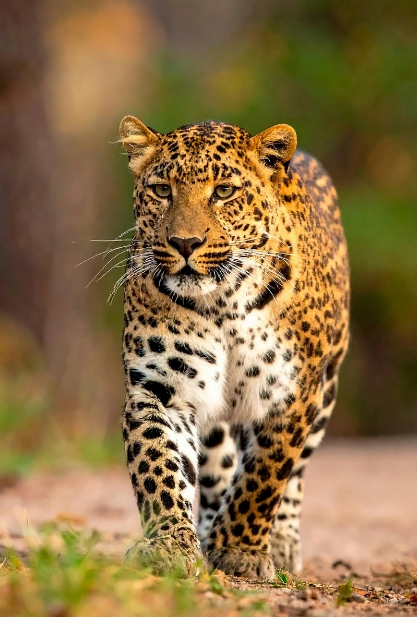
The Ghost of the Limpopo: Decoding Leopard Behavior in the South African Bush
Few animals embody mystery and mastery quite like the African leopard. Often called the “ghost of the bush,” this elusive predator thrives in some of the harshest and most competitive environments on Earth. Nowhere is this more evident than in the wild landscapes of Limpopo Province, where dense vegetation, rugged terrain, and a wide range of prey species create the perfect stage for one of nature’s most adaptable big cats.
Understanding leopard behavior isn’t just fascinating, it’s essential for effective conservation. By decoding how these animals hunt, move, and survive, we gain insights that help protect them for future generations.
Leopard Tree Tactics: Why They Hunt Vertically
Leopards are unique among large predators for their extraordinary use of vertical space. While lions dominate open plains and cheetahs rely on speed, leopards have mastered the trees.
Dragging prey into branches serves several critical purposes:
- Protection from scavengers such as hyenas and lions
- Food preservation, keeping carcasses cooler and away from ground-level decay
- Strategic feeding, allowing them to eat undisturbed over several days
A leopard can haul prey weighing more than its own body up a tree, a remarkable display of strength. This behavior is especially important in regions like Limpopo, where competition from other predators is intense.
Tree caching also reflects a broader survival strategy: efficiency. Leopards are opportunistic hunters, and securing a meal for multiple days reduces the need for repeated risky hunts.
This vertical hunting style shapes how leopards use their habitat. They prefer areas with sufficient tree cover, not just for resting, but as essential infrastructure for survival.
The Solitary Leopard: Life as a Lone Predator
Unlike lions, which live in prides, leopards are fiercely solitary. Each adult maintains its own territory, marked by scent and vocalizations.
This independence offers advantages:
- Reduced competition for food
- Greater stealth and flexibility
- Ability to adapt to a wide range of environments
However, it also comes with challenges. A solitary leopard must:
- Hunt successfully on its own
- Defend its territory from rivals
- Raise cubs without assistance
Female leopards are particularly remarkable. They raise cubs alone, teaching them to hunt, avoid danger, and navigate their environment. Cubs remain with their mother for up to two years before venturing out to establish their own territories.
This solitary lifestyle is one reason leopards are so difficult to study, and why they’ve earned their “ghost” reputation.
Leopard Stealth: Mastering Tactical Silence
If there is one trait that defines the leopard, it is stealth.
Leopards are ambush predators, relying on patience and precision rather than speed or brute force. Their hunting strategy involves:
- Moving silently through dense cover
- Using natural camouflage to blend into surroundings
- Stalking prey to within striking distance
- Launching a short, explosive attack
Their spotted coats, known as rosettes, break up their outline and make them nearly invisible in dappled light. Combined with slow, deliberate movement, this camouflage allows them to approach prey undetected.
Leopards also exhibit incredible control over their bodies. Each step is calculated to avoid noise, placing paws carefully, avoiding dry leaves or snapping twigs.
This level of stealth is not just about hunting. It also helps leopards avoid larger predators and human threats, making it a key survival trait in increasingly fragmented landscapes.
Low-Light Vision: How Leopards Own the Night
Leopards are primarily nocturnal, and their dominance after dark is no accident. Their vision is specially adapted for low-light conditions, giving them a significant advantage over prey.
Key features of leopard night vision include:
- A high concentration of rod cells in the retina, enhancing light sensitivity
- A reflective layer behind the retina (tapetum lucidum), which amplifies available light
- Large pupils that allow more light to enter the eye
These adaptations enable leopards to see clearly in near darkness, making nighttime the ideal window for hunting.
Operating at night offers additional benefits:
- Reduced competition from other predators
- Lower risk of human encounters
- Cooler temperatures, conserving energy
In regions like Limpopo, where daytime temperatures can be extreme, nocturnal behavior is both a hunting advantage and a survival necessity.
Leopard Conservation: Protecting the Species via Behavior
Understanding leopard behavior is critical for conservation efforts. Unlike species that rely on large groups or specific habitats, leopards are highly adaptable, but that doesn’t mean they are immune to threats.
Key conservation challenges include:
- Habitat loss due to agriculture and development
- Human-wildlife conflict, particularly with livestock
- Poaching and illegal wildlife trade
- Declining prey populations
By studying behavior, conservationists can develop more effective strategies. For example:
- Habitat planning can ensure the availability of tree cover for prey caching
- Conflict mitigation programs can account for leopard movement patterns
- Protected areas can be designed around territorial ranges
Organizations like HSCF play a role in supporting conservation initiatives that rely on this kind of science-based understanding.
Our Conservation Grants program helps fund projects that address habitat preservation, wildlife research, and anti-poaching efforts. Learn more about how these initiatives work in the field:
Additionally, education is a cornerstone of conservation. Resources like the HSCF’s podcast provide deeper insights into wildlife, hunting ethics, and conservation strategies:
By connecting behavior with conservation action, these efforts help ensure that leopards continue to thrive in their natural environments.
The Bigger Picture: Behavior as the Key to Survival
Leopards have survived where many other predators have declined, and their behavior is the reason why.
- Their tree-climbing ability protects their food
- Their solitary nature reduces competition
- Their stealth ensures hunting success
- Their night vision gives them dominance after dark
Each of these traits is a piece of a larger puzzle, one that allows leopards to adapt to changing environments and pressures.
But adaptation has limits. As human populations expand and landscapes change, even the most resilient species need support.
Final Thoughts
The African leopard is more than just a symbol of wilderness, it is a masterclass in survival. From the trees of Limpopo to the shadows of the night, every aspect of its behavior is finely tuned to its environment.
Decoding these behaviors doesn’t just deepen our appreciation for this remarkable animal. It provides the knowledge needed to protect it.
Through science, ethical wildlife management, and conservation support from organizations like the Hunting and Shooting Conservation Fund, we can ensure that the “ghost of the bush” continues to roam, silent, unseen, and enduring, for generations to come.