

Historic coastal prairie ranchland in Brazoria County permanently protected through collaborative conservation effort
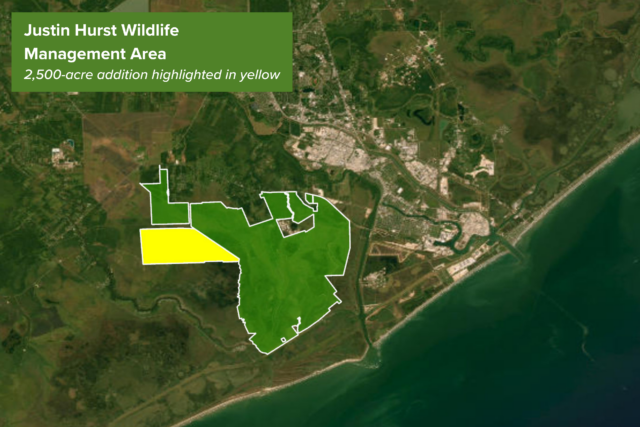
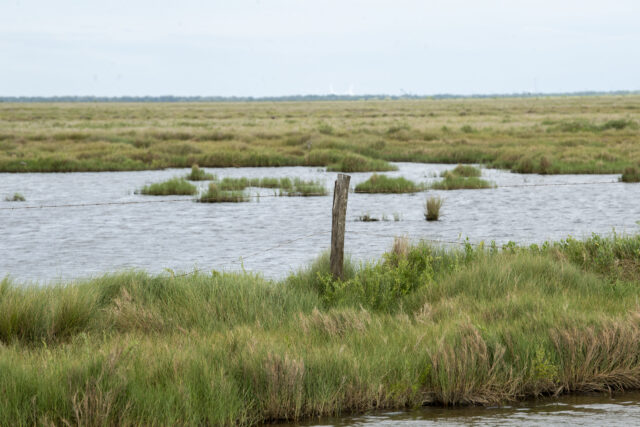
June 22, 2026 – Brazoria County, Texas – The Coastal Prairie Conservancy (CPC), in partnership with the Texas Parks and Wildlife Department (TPWD), has permanently conserved 2,500 acres of coastal prairie, wetlands, and tidal marsh in Brazoria County, expanding the Justin Hurst Wildlife Management Area (WMA) along the Texas coast. Funding for the purchase was provided by a RESTORE Act grant to CPC.
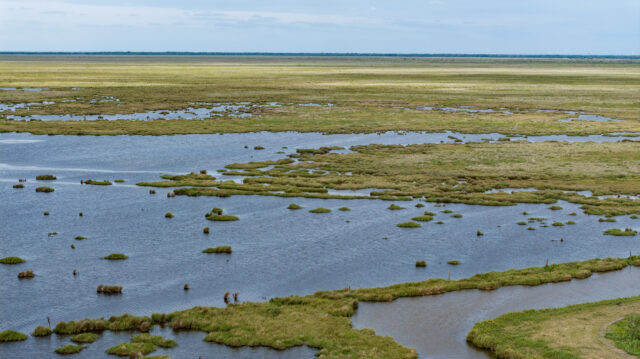
Located immediately west and north of the existing 15,033-acre Justin Hurst WMA, the property was voluntarily conserved through a partnership between the Ward family, the Coastal Prairie Conservancy, and the Texas Parks and Wildlife Department. The Ward family sold the property to CPC, which transferred ownership to TPWD to expand the Justin Hurst WMA. CPC holds a conservation easement on the property to ensure the land’s permanent protection.
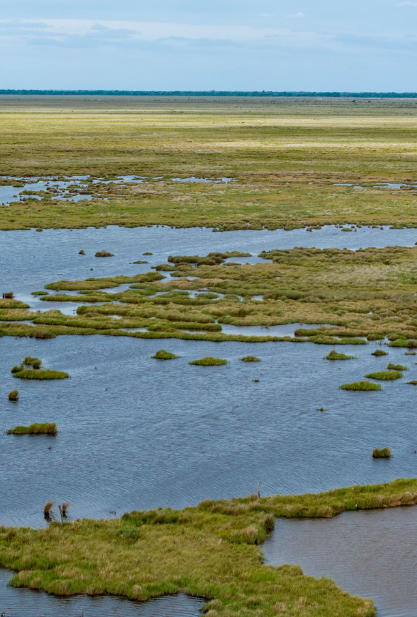
The expanded WMA now offers more than 17,500 acres of connected conserved habitat—some of the most ecologically significant remaining coastal prairie, wetlands, and marsh habitat on the Texas coast. The land supports species such as the Black Rail and Mottled Duck, in addition to other migratory waterfowl, shorebirds, and coastal wildlife. Long-term plans for the 2,500-acre property include incorporation into the broader Justin Hurst Wildlife Management Area public access framework. The WMA currently offers year-round access to the Jones Creek and Live Oak Nature loops, along with special permit hunts and scheduled tours.
 “This project permanently protects an extraordinary piece of the Texas coast,” said Mary Anne Piacentini, President and CEO of the Coastal Prairie Conservancy. “Conserving this property expands the Justin Hurst Wildlife Management Area, strengthens habitat connectivity to nearby conserved landscapes, including the San Bernard National Wildlife Refuge, and ensures that future generations will continue to benefit from the wildlife, natural resources, and resilience these lands provide.”
“The Texas Parks and Wildlife Department thanks the Ward family and Coastal Prairie Conservancy for entrusting us with stewardship of this special piece of Texas,” said David Butler, TPWD’s Project Leader for the Central Coast Wetland Ecosystem Project. “By joining it with the Justin Hurst Wildlife Management Area, the department will manage the property with many of the same land-use practices employed by the Ward family over the years. The family’s heritage of cattle grazing, prescribed burning, and recreational hunting to conserve the property’s habitats and wildlife populations will continue under the Department’s stewardship.”
The property, known within the Ward family as “Down Below,” has been owned and stewarded by the family for generations. The Ward family traces its roots to Emily Austin Perry, Stephen F. Austin’s sister, whose family was among Austin’s “Old Three Hundred” settlers. Through decades of ranching, hunting, and land stewardship, the family worked to maintain the property’s ecological character while preserving it as a working landscape.
For the Ward family, permanently conserving the land honors the legacy of the late Lee Taylor Ward, a lifelong rancher, outdoorsman, and conservation-minded steward who cared deeply about the future of the Texas coast. By protecting the property as part of the Justin Hurst WMA, the family is guaranteeing that the landscapes and wildlife that shaped generations of memories will remain intact for future Texans.
“He loved that land,” said Emily Ward, daughter of the late Lee Taylor Ward. “He loved getting up every morning and going out there. He believed this landscape mattered, not just for our family, but for wildlife, for ranching, and for the future of the Texas coast.”
Established following the Deepwater Horizon oil spill, the RESTORE Act, which made the conservation of this property possible, directs Gulf Coast restoration funds toward projects that restore and protect coastal ecosystems and communities. Conserving this property advances those coastal resilience goals by protecting coastal prairie and marsh habitat that store floodwaters, improve water quality, and help buffer coastal communities from severe storms.
 “Protecting these 2,500 acres of coastal prairie, wetlands, and tidal marsh through the RESTORE Act is a significant win for Texas conservation,” said Steven Schar, Governor Abbott’s designee to the RESTORE Council and Deputy Executive Director of the Texas Commission on Environmental Quality. “This expansion of the Justin Hurst Wildlife Management Area enhances critical habitat, improves coastal resilience, and preserves this important landscape for future generations. We appreciate the Ward family’s stewardship and the strong partnership with the Coastal Prairie Conservancy and Texas Parks and Wildlife Department.”
Additional support for the project was provided through partnerships with the Partnership for Gulf Coast Land Conservation and the Galveston Bay Estuary Program Conservation Assistance Program.
The expansion of Justin Hurst WMA represents another significant step in protecting and reconnecting coastal habitats across Southeast Texas. As development pressure continues to increase along the Gulf Coast, projects like this help ensure that working lands, wildlife habitat, and the ecological heritage of the Texas coast remain intact for future generations.
“The RESTORE Council is delighted to support the Coastal Prairie Conservancy, the Texas Commission for Environmental Quality, and the Texas Parks and Wildlife Department in their collaborative efforts to permanently protect the coastal prairie and wetland habitats that have been cherished and faithfully stewarded by the Ward family for so many years,” said Council Executive Director Mary Walker. “By safeguarding these lands and allowing them to continue serving as valuable fish and wildlife habitat in perpetuity, the State of Texas is investing in the continued health of Gulf Coast ecosystems, which in turn support healthy Gulf Coast communities.”
About the Coastal Prairie Conservancy
The Coastal Prairie Conservancy is a nonprofit land trust dedicated to sustaining a resilient Texas by preserving coastal prairie, wetlands, farms, and ranches to benefit people and wildlife forever. Preserved lands play an important role in flood control, cleaner air and water, outdoor recreation, and wildlife habitat. To learn more about the Coastal Prairie Conservancy’s conservation efforts, visit www.coastalprairieconservancy.org or find them on Facebook and Instagram @coastalprairieconservancy.
About the Texas Parks and Wildlife Department
The Texas Parks and Wildlife Department mission balances outdoor recreation and sustainable use of resources with conservation and management of natural and cultural resources. The department operates over 90 Texas state parks, natural areas and historic sites, more than 50 wildlife management areas, three saltwater fish hatcheries, and five freshwater hatcheries. TPWD game wardens and wildlife and fisheries biologists work in every Texas county, enforcing laws and encouraging management to conserve fish and wildlife. The agency has 13 internal divisions: Wildlife, Coastal Fisheries, Inland Fisheries, Law Enforcement, Legal, State Parks, Infrastructure, Communications, Financial Resources, Human Resources, Support Resources, Information Technology, and the Executive Office. www.tpwd.texas.gov
About the RESTORE Council
The Gulf Coast Ecosystem Restoration Council (RESTORE Council) is a small federal agency established in the wake of the Deepwater Horizon disaster to plan for and carry out restoration across the Gulf Coast. Led by the governors of the five Gulf states and heads of six federal agencies, the RESTORE Council funds and oversees more than $3.2 billion in ecosystem restoration funding for projects focused on habitat protection, wetland restoration, water quality improvement, and a range of other large-scale ecosystem and economic activities from Texas to Florida. The funding for these investments comes from civil penalties paid by parties responsible for the Deepwater Horizon oil spill, managed through the Gulf Coast Restoration Trust Fund.