



Anyone who grows tomatoes will likely end up with quite a few green ones at the end of the season that never got the opportunity to ripen. I know I am the proud owner of nearly a bushel of unripe tomatoes from my garden every September or October.
So… what do you do with them? There are plenty of chutney, chow-chow, and relish recipes online that use green tomatoes, and I’ve made several of them over the years. There’s also fried green tomatoes, which we’ve probably all heard about–delicious, but that isn’t the only way you can use them up.
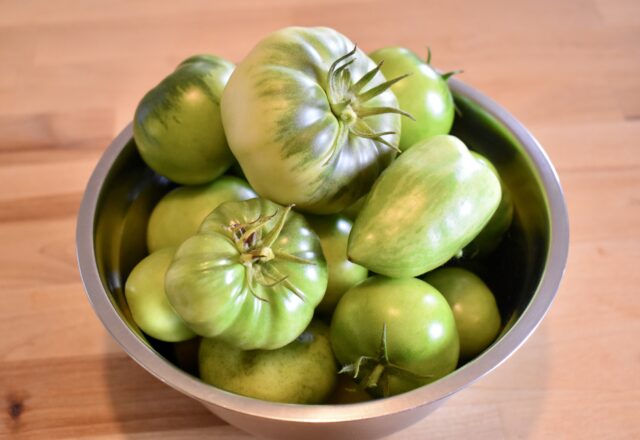 Green tomatoes have always reminded me of their cousins, the tomatillos. Tomatillos make an excellent stew or chile verde, so my mind naturally began to wonder if green tomatoes could do the same. After some recipe testing, I discovered that they certainly do!
Tasting my original test recipes, I was struck by the tart/sweet/savory combo the cooked green tomatoes produced, and just knew that the flavor would go perfectly with rich, Texan wild pork shoulder.
I’d shot the hog while helping to host Harvesting Nature’s Wild Pig Hunting Skills Camp northwest of Dallas and had been saving the shoulders (one of my favorite cuts) for something just like this. This was actually the first wild hog I’d ever shot, and it was a bit of a funny story.
Showing up at camp a day before our guests arrived, I’d gone out hunting twice, hoping to bag myself a wild pig, but to no avail. I could hear sounders of them around me both times, but the wind was swirling, and they must have gotten nervous, as they never showed themselves.
Giving up on the pigs, I got to work, cooking the many wild pork dishes that we like to greet our guests with. It was mid-afternoon, just as folks were beginning to show up, when my friend and co-worker burst through the door and said that there were pigs within sight of the building I was working in.
“Do you want to get your pig?” he asked bluntly, “If so, you’ve got to do it now!”
I had just put some wild pork fat cookies with candied pork “chips” in the oven and was worried for them, but I knew this might be my last chance for the season. I doffed my apron, grabbed a rifle and ran outside. Spotting the pigs moving around in the treeline, I set myself up on a piece of patio furniture of all things (one had been dragged out by a sunbathing client at some point), and found the pigs through my scope.
The pig I was aiming for was quickly rooting back and forth along with the rest of the sounder, and I was having trouble keeping my scope trained on him. A small crowd was quietly gathering behind me, made up of arriving guests and co-workers – not helpful!
I decided it was now or never, so I took the shot, hitting the pig in the neck. A second shot put it down for good.
“SOMEONE GO CHECK ON THOSE COOKIES!” I yelled as I ran out to collect my prize and get it hung up, so I could get back to cooking.
It wasn’t how I’d pictured shooting my first wild pig, but I was happy with the size and coloring of it, even though I had to leave it almost immediately to go finish cooking the meal.
I brought the meat home in a new cooler, and it turns out I’d never checked if the drain hole was properly capped. I found this out when someone behind me in a long airport line asked me why there was blood draining out of my cooler onto the floor. The group around me all had a laugh when I explained (and attempted to clean it up). It ended up starting a fantastic conversation about hunting and invasive species with a crowd who had never been exposed to that sort of thing before. When the guy behind me asked what I was most looking forward to from the pig, I immediately answered, “The shoulders!”
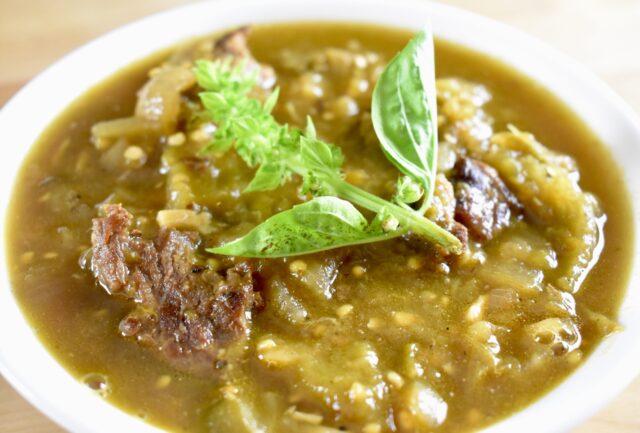
Back to the dish. After stewing everything down for a couple of hours, the cubed pork shoulder was meltingly tender, swimming in the stewed green tomatoes, which boasted an incredible depth of flavor, along with some acidity to cut through the rich pork. The anchovies I call for in the recipe are definitely optional, but they do provide a big hit of umami goodness without imparting any fishy flavor at all. A couple of dashes of Asian fish sauce or Worcestershire sauce would produce similar results. Some fresh basil, the last from my garden, provided the perfect blast of fresh herbaceousness to balance everything out.
Remember, green tomatoes can be hard on the digestive system if eaten raw, but when cooked down into a stew like this one, they transform into something delicious and easily digested.
Feel free to use domestic pork shoulder in place of the wild pork shoulder I used for this recipe. Shank and neck would also work great, but you may need to lengthen the cooking times to allow for these tougher cuts to soften. If you can’t get a hold of green tomatoes, you can substitute tomatillos instead.
Serves: 4 servings
Prep Time: 20 minutes
Cook Time: 2 hours
Ingredients:
- 1.5lbs wild pork shoulder
- 2 tablespoons neutral oil or lard
- 2 medium onions, chopped
- 4 cloves garlic, chopped
- 1 jalapeño or serrano chili, chopped
- 3 anchovies (optional)
- Kosher salt
- Black pepper
- 1 bay leaf
- 2 lbs green tomatoes, stemmed and roughly chopped
- 2 cups wild pork or chicken stock
- 1 small bunch fresh basil
Instructions:
- Cut the pork shoulder into bite-sized cubes.
- Heat the oil in a Dutch oven over high heat. Add the pork cubes and cook for 10 minutes, flipping them so that all sides become nicely browned. Add the onions and cook for about 5 minutes, or until beginning to brown. Add the garlic, jalapeño, and anchovies (the anchovies will melt away in the stew), and cook for an additional 2 minutes.
- Add a pinch of salt and pepper, the bay leaf, the chopped green tomatoes, and the stock. Bring to a boil, then reduce to a simmer. Cover and cook for 1 hour.
- Take the lid off and cook for another 30-60 minutes, or until your desired stew-like consistency is achieved. Taste for seasoning.
- To serve, ladle into bowls and garnish with a handful of fresh basil leaves. Enjoy!
By: Adam Berkelmans
Be a part of the HSCF Community!
Joining HSCF means becoming part of a passionate, global community dedicated to wildlife conservation and sustainable hunting. Members support critical conservation efforts and gain access to exclusive events, educational resources, and networking opportunities. United by a love for nature and responsible outdoor practices, HSCF members play a vital role in preserving wildlife and habitats for future generations.