

 When hunters and gun owners don’t vote, they cede power in political decisions that directly affect their recreational rights, conservation, public lands access, and firearm legislation. Recent reports show millions in this community are not registered to vote—and many are unaware how large the gap is and how deeply it influences policy outcomes.
This blog explores who these people are, what the scale of the issue is, what might be causing it, and why it matters—especially for anyone who cares about hunting, sport shooting, or broadly, Second Amendment rights.
The Size of the Unregistered Bloc
Several reliable sources now estimate that 10 million hunters and gun owners in the U.S. are not registered to vote. That figure comes from a Vote4America survey reported by American Hunter.
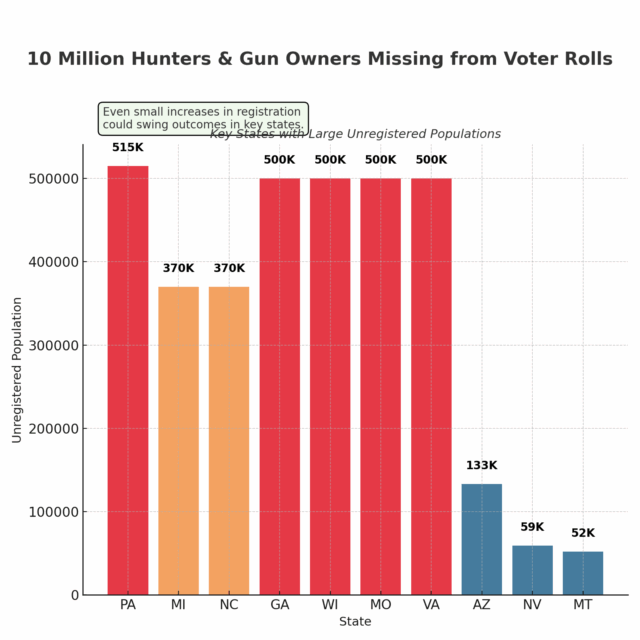
Digging deeper, the National Shooting Sports Foundation (NSSF) highlights “critical swing states” where the numbers of unregistered hunters and shooters are especially high. For example:
- Pennsylvania: about 515,000 unregistered gun owners / hunters
- Michigan and North Carolina: around 370,000 each
- Georgia, Wisconsin, Missouri, Virginia: each with more than half a million unregistered hunters/gun owners
- Less so, but still significant: Arizona (~133,000), Nevada (~59,000), and Montana (~52,000)
Another critical point: since 2020, more than 22.3 million new first-time gun owners have entered the picture. Many of these are not yet registered to vote, but they represent a large potential voting bloc.
Why So Many Unregistered?
Several contributing factors emerge from the reporting:
- Lack of awareness or inertia
Many hunters and gun owners may talk about issues like rights, conservation, or land access—but they don’t realize how much voting (and registration) concretely affects those matters. They might feel their voice doesn’t matter, or that registering is too much effort. - Timing conflicts
Hunting season overlaps with important deadlines or even with election day in many places. If someone is in the field, off the grid, finishing their license purchase, or otherwise occupied, they might miss registration deadlines or early voting windows. - Regulatory or procedural friction
Some states have made it easier, but not all. The Congressional Sportsmen’s Foundation notes that some states (e.g., Georgia, Virginia) have enacted laws that allow voter registration at the point of obtaining a hunting or fishing license. - However, plenty of others have not, or have not yet implemented such measures. And in places where these laws exist, there may still be logistical or bureaucratic barriers (lack of publicity, confusing process, disconnects between wildlife/fish & game departments and election offices, etc.).
- Geographic and demographic challenges
Rural areas often where hunting is more common tend to have less access to voting resources, fewer polling places, or less robust public transportation. Mail-in or absentee voting options vary widely. Some hunters are transient or travel for recreation, making consistent registration and voting more complicated. - Partisan or motivational issues
Some of the coverage (especially by groups like NSSF and Vote4America) frames the issue in terms of political influence: that many hunters and gun owners are politically conservative or lean that way, and that political parties may be underutilizing this potential base. But the core issue isn’t about party; it’s about making sure people who feel strongly about hunting, conservation, Second Amendment rights, or land access have the institutional means to make their voices heard.
Why It Matters
The consequences of having millions of hunters and gun owners unregistered or under-represented are significant:
- Legislation affecting gun rights, hunting permissions, conservation, access to public lands is often decided by state legislatures and county boards—where the margins are tight. If even a small proportion of this community votes, it could swing outcomes in those close races.
- Policy tends to follow votes: elected officials see what parts of the electorate are engaged. If the hunting / gun-owning population stays disengaged, candidates may deprioritize issues that are important to them, whether that means wildlife funding, regulation of firearms, or public land management.
- Conservation funding and fish & wildlife policies often depend on both federal and state-level funding, which in turn depend on tax and license revenues—and on political support. Voting participation helps shape who controls those budgets.
- Preservation of traditions — hunting, shooting sports, family and community activities built around outdoor life — is not just a matter of nostalgia; many see it as part of heritage, identity, rural economies, and environmental stewardship. If decisions are made without input from these communities, traditions may erode.
What Has Been Done — and What More Could Help
Some states have made meaningful attempts to close the registration gap among hunters:
- Voter registration at license purchase
States like Georgia and Virginia allow people to register when obtaining hunting or fishing licenses. - Legislative efforts in New York, New Jersey and others have tried to make these linkages, although sometimes with slow progress or mixed success.
- Awareness campaigns
Initiatives like NSSF’s “#GUNVOTE” and Vote4America aim to raise awareness among gun owners and hunters about registration deadlines, polling locations, absentee voting, etc. - Nonprofits and conservation groups partnering to make “sportsmen voter rights” part of their mission—to ensure that materials, forms, and help are available through wildlife/firearms licensing bodies.
But more could help:
- Systematic integration of registration at every relevant touchpoint — e.g., fish & wildlife departments, license vendors, shooting ranges, gun stores, retailer checkouts etc.
- Improved education in rural or high-hunting areas about how and when to register, vote absentee, early vote options etc.
- More data: down to county level, demographic breakdowns, to understand which subgroups are most under-registered (age, race, rural vs urban, etc.).
- Simplifying the process further: online registration, same-day registration, mobile registration units in rural areas.
Facing Forward: Opportunity and Responsibility
For hunters, gun owners, recreational shooters, and conservationists who care about preserving rights, traditions, and access to lands, the registration gap isn’t just a political statistic—it’s an urgent issue. The opportunity is real: even converting a few percentage points more of this population to registered and voting status can shift outcomes in key states and counties.
Every election matters—not just national ones, but local, state, wildlife commission, and county races. Whether the issue is whether a certain parcel of land remains open for hunting, how game laws are enforced, or what restrictions might come on guns, those decisions often happen at local levels, where turnout is low and margins can be narrow.
If hunters and gun owners show up not just in the woods, but at the ballot box, their concerns are much more likely to be heard, respected, and codified into law.
Takeaways
- Approximately 10 million hunters and gun owners in the U.S. are not registered to vote. Even more are registered but don’t vote.
- In many swing states, big numbers of this community are sitting out—not because they don’t care, but often because of timing, awareness, and procedural barriers.
- Voting is a direct lever on policy outcomes: gun rights, conservation, public land access, regulation, and more.
- There are some positive legislative and organizational efforts underway (e.g., registration at license purchase, awareness campaigns), but there’s room for broader, more inclusive action.
Be a part of the HSCF Community!
Joining HSCF means becoming part of a passionate, global community dedicated to wildlife conservation and sustainable hunting. Members support critical conservation efforts and gain access to exclusive events, educational resources, and networking opportunities. United by a love for nature and responsible outdoor practices, HSCF members play a vital role in preserving wildlife and habitats for future generations.