



 In Texas, hog hunting isn’t just a pastime — it’s a necessity. Feral hogs have become one of the most destructive invasive species in the state, tearing up farmland, damaging ecosystems, and costing millions of dollars in property and crop losses each year. For hunters, this creates a unique opportunity: the chance to enjoy challenging hunts while contributing to conservation and land management.
But hog hunting in Texas isn’t as straightforward as it sounds. These animals are intelligent, resilient, and adaptable — qualities that make them both formidable opponents and a valuable resource for hunters looking to sharpen their skills.
In this article, we’ll explore what makes hog hunting in Texas such a distinctive pursuit, covering their behavior, hunting methods, and the broader impact of the hunt.
The Rise of the Texas Hog Problem
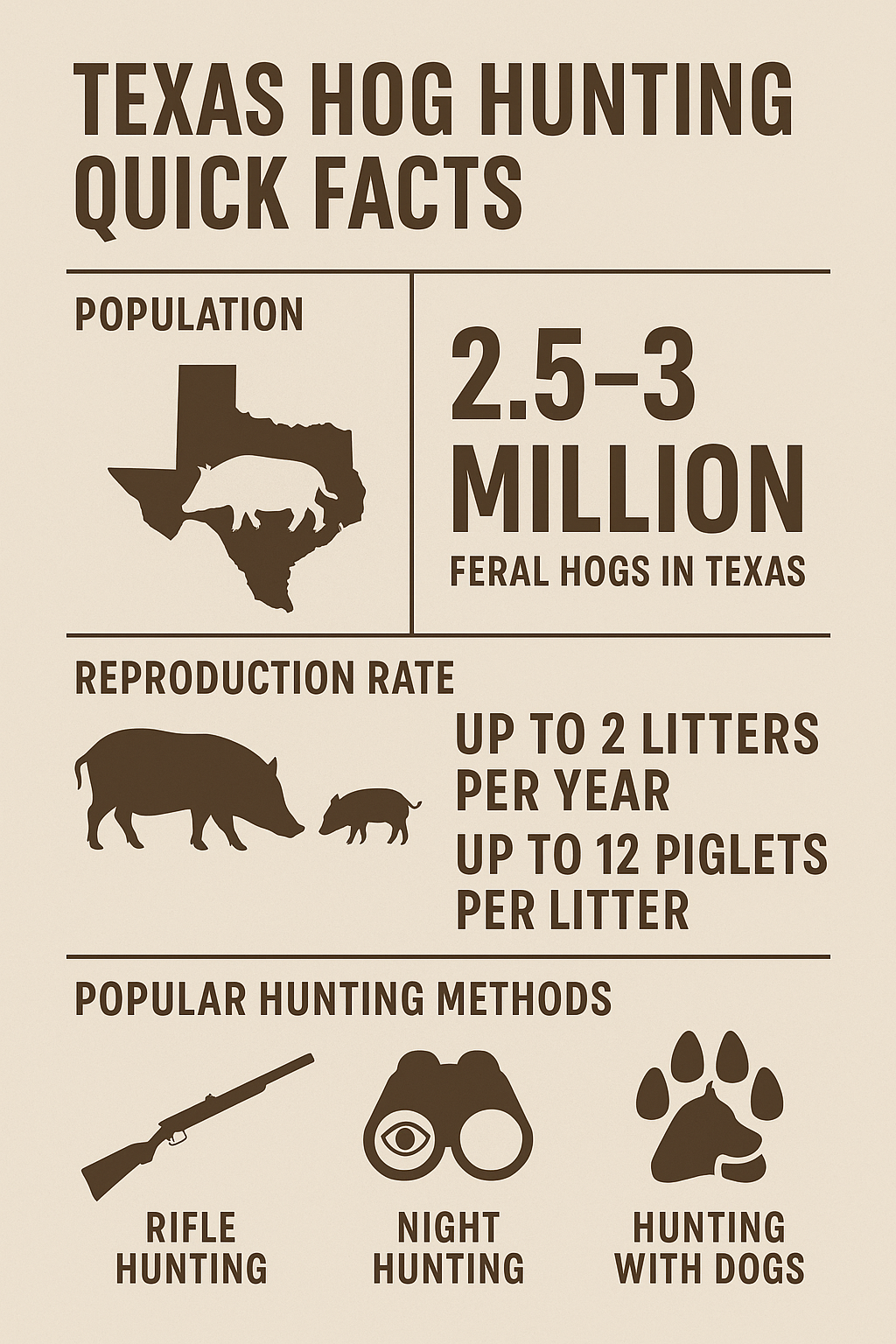
Texas is home to an estimated 2.5 to 3 million feral hogs — more than any other state. Originally brought by Spanish explorers in the 1500s and later expanded by escaped domestic hogs, their population exploded due to a lack of natural predators, high reproductive rates, and the state’s favorable climate.
A single sow can produce two litters of up to a dozen piglets per year. With such prolific reproduction, populations can double in just a few years if unchecked. Their rooting habits devastate crops, native plants, and soil, while their competition for food sources threatens native wildlife.
For this reason, Texas allows year-round hog hunting with no bag limit on private land — making them one of the most accessible game animals for hunters.
Understanding Hog Behavior
To hunt hogs successfully, you have to understand how they live and think.
Habitat and Movement
Feral hogs are highly adaptable, thriving in a range of environments, from dense river bottoms to open pastures. They prefer areas with water sources, heavy cover, and abundant food. Hogs are primarily nocturnal, especially in areas with heavy hunting pressure. They often feed at night and bed in thick cover during the day.
Diet
They are opportunistic omnivores, eating everything from acorns and crops to small animals and carrion. Hunters often find hog activity near corn feeders, agricultural fields, and oak stands during acorn drops.
Social Structure
Hogs typically travel in groups called sounders, usually composed of sows and their offspring. Mature boars often roam alone, particularly during breeding periods. Sounders are easier to locate, but boars are often the most sought-after trophies.
Senses
Their sense of smell is exceptional — far better than their eyesight. Wind direction is critical when stalking hogs, as they can detect human scent from long distances. They’re also quick learners; once pressured, hogs adjust their patterns to avoid hunters.
Methods of Hog Hunting in Texas
Texas offers a wide range of hunting styles, making it possible for hunters of all skill levels to participate.
Still Hunting and Spot-and-Stalk
One of the most traditional methods, still hunting involves quietly moving through hog habitat at dawn or dusk, using wind and cover to your advantage. Spot-and-stalk is especially effective in agricultural fields where hogs come out to feed in the evening.
Hunting Over Feeders
Many hunters use corn feeders to attract hogs, especially in areas where they’ve become nocturnal. This method is particularly effective with archery equipment or when introducing new hunters to the sport.
Night Hunting with Thermal and Night Vision
Given their nocturnal habits, night hunting has become one of the most popular and effective methods. Thermal scopes allow hunters to detect hogs by their heat signature, even in complete darkness. This approach is legal on private land and often produces high success rates.
Hunting with Dogs
Using trained dogs is a traditional and adrenaline-filled way to hunt hogs. Bay dogs locate and hold hogs in place with barking, while catch dogs restrain them until the hunter arrives. This method requires specialized training and experienced handlers but is one of the most effective for removing hogs from the landscape.
Helicopter Hunts
Texas is famous for offering helicopter hog hunts, where hunters fly over ranches and use rifles to control large sounders. While not practical for everyone, this method has proven effective for population control on large properties.
Safety and Ethical Considerations
Hog hunting, while exciting, comes with serious responsibilities.
- Weapon Choice: Ensure your firearm or bow is powerful enough for a clean, ethical kill. Hogs are tough animals with thick hides and heavy bone structure, particularly in boars.
- Shot Placement: Vital shots are typically just behind the shoulder, but the “shield” of cartilage protecting a boar’s vitals can complicate penetration.
- Disease Awareness: Feral hogs can carry diseases such as brucellosis, leptospirosis, and pseudorabies. Always wear gloves when handling carcasses and cook meat thoroughly.
- Respect for Landowners: Most hog hunting occurs on private property. Obtain permission, follow landowner rules, and leave the land as you found it.
The Role of Hunters in Conservation
Hog hunting in Texas is more than a recreational pursuit; it’s a service to landowners and the environment. By reducing hog numbers, hunters help protect native habitats, agricultural crops, and the state’s biodiversity.
Many hunters also donate harvested hog meat to local food banks through programs that process wild game for families in need. This turns a destructive pest into a valuable resource.
Tips for Success
If you’re new to hog hunting in Texas, here are a few tips to increase your chances:
- Scout Ahead of Time: Look for fresh rooting, tracks, wallows, and droppings.
- Play the Wind: Always keep the wind in your face; hogs will smell you before they see you.
- Hunt Water Sources: In hot Texas weather, hogs often congregate near rivers, ponds, or stock tanks.
- Stay Flexible: If hogs are avoiding feeders, try spot-and-stalk or night hunting.
- Be Patient: Hogs are wary, and success often comes after several hunts of learning their patterns.
Final Thoughts
Hog hunting in Texas blends tradition, challenge, and conservation into one of the most unique hunting experiences in North America. These animals demand respect for their intelligence and resilience, and each hunt offers an opportunity not just to test your skills, but to play a vital role in protecting the land.
Whether you’re pursuing a trophy boar under the stars with a thermal scope, guiding bay dogs through a thicket, or simply waiting quietly by a feeder at dawn, hog hunting offers lessons in patience, adaptability, and stewardship.
In the end, every hunt contributes to a larger goal: balancing the needs of people, wildlife, and the land itself — a mission worth every step into the Texas wild.
Be a part of the HSCF Community!
Joining HSCF means becoming part of a passionate, global community dedicated to wildlife conservation and sustainable hunting. Members support critical conservation efforts and gain access to exclusive events, educational resources, and networking opportunities. United by a love for nature and responsible outdoor practices, HSCF members play a vital role in preserving wildlife and habitats for future generations.