


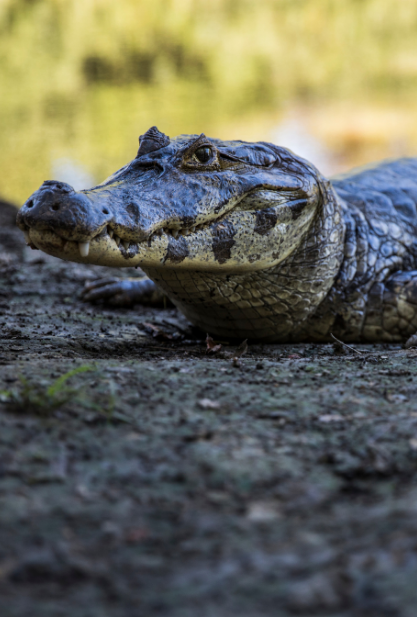
Masters of the Marsh: Tracking the Wetland Habits of the Argentine Caiman
The Argentine caiman is one of South America’s most adaptable and fascinating wetland predators. Found throughout the marshes, rivers, and flooded grasslands of the Pampas and the Iberá Wetlands, this reptile plays a critical role in maintaining ecological balance in some of the continent’s richest aquatic habitats.
From thermoregulation and stealth hunting to shaping entire wetland systems, the caiman is far more than an apex predator; it is a key architect of its environment.
Thermal Regulation: How caimans utilize daily sun and water cycles to regulate their body temperature
As ectothermic reptiles, Argentine caimans rely heavily on their surroundings to regulate body temperature. Basking in the sun during cooler morning hours allows them to raise their internal temperature, while submerging in water or mud helps prevent overheating during peak heat.
This daily cycle of sun and water use is not random; it is a finely tuned behavioral system that allows them to conserve energy while remaining highly efficient predators. By positioning themselves along riverbanks and shallow channels, caimans can shift rapidly between land and water as conditions change.
This balance is essential to survival in the variable climate of the Iberá Wetlands wildlife system, where seasonal flooding and drought constantly reshape habitat conditions.
The Ambush Strategy: The unique underwater hunting mechanics and sensory organs used to track prey
Argentine caimans are expert ambush predators, relying on patience, stealth, and highly specialized sensory adaptations. Their eyes, ears, and nostrils are positioned on the top of the head, allowing them to remain nearly fully submerged while monitoring their surroundings.
This adaptation enables them to detect movement and vibration at the water’s surface without revealing their presence. Once prey approaches; whether fish, birds, or small mammals, the caiman can launch a rapid, explosive strike from beneath the water.
Their hunting style is a defining example of caiman hunting habits and illustrates why they are among the most efficient wetland predators South America has to offer.
Ecosystem Engineering: How caiman wallows create vital water holes for other Pampas and marsh species during dry seasons
Beyond predation, Argentine caimans also play a surprising ecological role as ecosystem engineers. Their repeated use of specific resting and basking sites creates depressions, or “wallows,” in mud and soft substrate.
During dry seasons, these wallows can retain water long after surrounding areas have dried, forming critical microhabitats for fish, amphibians, insects, and even birds. In this way, caimans indirectly support biodiversity across the marsh ecosystem.
These natural water pockets become lifelines in periods of drought, demonstrating how apex predators can also function as environmental stabilizers within wetland systems.
Sustainable Wetlands: Supporting international conservation efforts to protect South American aquatic habitats
The long-term health of South America’s wetlands depends on responsible management, habitat protection, and international cooperation. As human activity continues to shape these environments, conservation efforts are increasingly focused on maintaining balance between wildlife populations and ecosystem integrity.
Organizations like HSCF support global conservation initiatives through education, outreach, and field-based programs that promote sustainable wildlife management. Learn more about HSCF membership opportunities here: https://hscfdn.org/membership/
For deeper conversations on wildlife, conservation, and hunting around the world, explore the Hunting Matters Podcast: https://hscfdn.org/hunting-matters-podcast/
Through education and engagement, we can help ensure that species like the Argentine caiman continue to thrive within healthy, functioning wetland ecosystems for generations to come.