


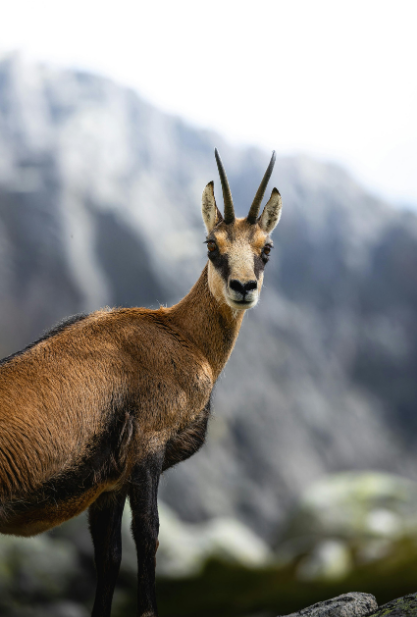
The Alpine Chamois of New Zealand: Surviving the Southern Alps
New Zealand’s Southern Alps are home to one of the most remarkable alpine ungulates on earth — the chamois. Originally introduced from Europe, these sure-footed mountain specialists have adapted to some of the steepest, most unforgiving terrain in the Southern Hemisphere. Their presence today reflects both ecological resilience and the ongoing role of managed hunting in maintaining balance in high-country ecosystems.
For hunters, conservationists, and wildlife enthusiasts alike, the chamois represents a unique intersection of adaptation, behavior, and stewardship in extreme alpine environments.
Born for the Steeps: How the unique hoof biology of the chamois allows them to navigate vertical ice and rock
The chamois is engineered for survival in terrain where most species simply cannot exist. Their specialized hoof structure features hard outer edges and soft, flexible inner pads that act like natural climbing equipment. This combination allows them to grip narrow rock ledges, icy slopes, and near-vertical cliff faces with remarkable precision.
In addition to their hooves, chamois possess powerful hindquarters and an extraordinary sense of balance, enabling rapid directional changes on unstable ground. These traits make them one of the most efficient alpine climbers in the animal kingdom and a defining species of New Zealand chamois hunting landscapes today.
Their biomechanics are not just fascinating — they are essential to survival in the ever-changing conditions of the Southern Alps.
Sentinel Behavior: Understanding the herd’s advanced warning systems and dominant alpha traits
Chamois herds operate with a high level of vigilance and structured social awareness. Typically led by mature females, the group relies on “sentinel behavior,” where one or more individuals constantly monitor for predators or threats while others feed.
When danger is detected, a sharp whistle-like call triggers an immediate cascade response — the herd moves as a coordinated unit across terrain that would be nearly impossible for most predators to pursue.
Dominant males are more solitary outside of the rut, but during breeding season they exhibit strong territorial instincts and compete for access to groups of females. This seasonal shift in behavior plays a key role in population dynamics and is a critical factor in understanding alpine animal behavior across introduced mountain species.
The Pacific Introduction: How these European native mountain goats adapted to the New Zealand ecosystem
Chamois were introduced to New Zealand in the early 20th century, originally brought from Europe as part of acclimatization efforts. Once released into the Southern Alps, they quickly discovered a landscape that mirrored — and in many ways exceeded — their native alpine environments.
With minimal natural predators and vast expanses of steep terrain, the species expanded rapidly. Over time, they adapted to local vegetation, seasonal weather extremes, and unique ecological pressures within the Southern Alps wildlife system.
Their successful establishment is often studied as a case example of species adaptation, but also as a reminder of how introduced animals can significantly reshape alpine ecosystems if left unmanaged.
High-Country Conservation: The critical role international hunters play in managing alpine herd densities
Today, chamois populations in New Zealand are managed through a combination of science-based wildlife management and regulated hunting. Without natural predators in many regions, population control is essential to prevent overgrazing and protect fragile alpine vegetation.
International hunters contribute directly to this balance. By participating in regulated harvest programs, they help maintain sustainable herd densities while supporting conservation funding and rural economies.
Organizations like HSCF help advance these efforts through conservation grants and advocacy initiatives that support responsible wildlife management worldwide. Learn more about HSCF’s conservation impact and funding programs here: https://hscfdn.org/grants/ and https://hscfdn.org/advocacy/
Through this partnership between hunters, land managers, and conservation groups, the long-term health of New Zealand’s alpine ecosystems can be preserved for future generations.