


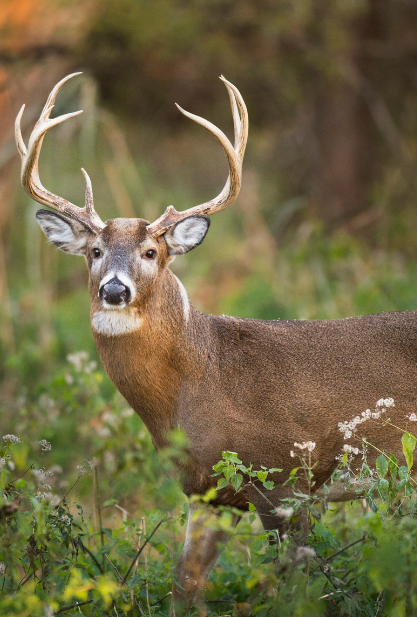
North American Whitetail: The Science of the “Rut” and Habitat Health
Each fall, across forests, farmlands, and river bottoms of North America, a dramatic shift takes place. Mature bucks that have spent most of the year in isolation suddenly become highly active, visible, and unpredictable. This period—known as the rut—is more than a hunting phenomenon; it’s a complex biological event that reflects the health of both deer populations and their habitats.
Understanding the science behind the rut offers valuable insight into wildlife management, conservation, and the long-term sustainability of whitetail deer.
Hormones and Movement: The Biology Behind the Rut
The whitetail rut is triggered primarily by photoperiod, or the shortening of daylight hours. This environmental cue stimulates hormonal changes in bucks, particularly a surge in testosterone.
As testosterone levels rise:
- Bucks increase movement: They travel farther in search of receptive does
- Daylight activity spikes: Normally nocturnal patterns shift, making deer more visible
- Aggression intensifies: Competition for breeding leads to fights and dominance displays
Interestingly, while weather can influence day-to-day movement, the timing of the rut itself remains remarkably consistent year to year within a region. This consistency is why tools like “rut predictions” are often based more on historical breeding windows than short-term conditions.
The rut typically unfolds in phases:
- Pre-rut: Increased scraping and rubbing activity
- Peak rut: Breeding activity reaches its highest intensity
- Post-rut: Movement declines as bucks recover from physical stress
In most regions, the entire cycle lasts several weeks, though peak breeding may only span a short window.
Communication Lines: Rubs, Scrapes, and Vocalizations
Whitetail deer rely on a sophisticated system of communication during the rut—one that combines scent, visual cues, and sound.
- Rubs: Bucks strip bark from trees using their antlers, marking territory and signaling strength
- Scrapes: Pawed areas on the ground where bucks deposit scent from glands; these act as communication hubs visited by multiple deer
- Vocalizations: Grunts, bleats, and even rattling antlers simulate social interactions and dominance battles
These behaviors create what could be described as a “communication network” across the landscape. Rather than random acts, rubs and scrapes form patterns that reflect movement corridors, dominance hierarchies, and breeding activity.
For wildlife managers, these signs provide valuable data about deer density, age structure, and habitat use.
Impact of Overpopulation: When Behavior Signals a Problem
In areas where whitetail populations exceed the land’s carrying capacity, the rut can begin to look very different—and less healthy.
Overpopulation often leads to:
- Increased competition: More aggressive encounters among bucks
- Nutritional stress: Limited food resources reduce body condition
- Altered movement patterns: Deer may expand into marginal habitats or human-dominated areas
- Delayed or extended breeding: Does in poor condition may enter estrus later, stretching the rut
These behavioral changes are more than curiosities—they are warning signs. Overbrowsing can damage native vegetation, reduce biodiversity, and degrade habitat for other wildlife species.
This is where habitat restoration and population management become essential. Regulated hunting plays a key role in maintaining balance, ensuring that deer populations remain in line with available resources.
The North American Model: Science-Based Wildlife Management
The success of whitetail deer conservation is often credited to the principles of the North American Model of Wildlife Conservation, a system that emphasizes science-based management, regulated harvest, and public involvement.
By understanding deer behavior—especially during the rut—wildlife agencies can:
- Set appropriate harvest limits
- Balance buck-to-doe ratios
- Monitor herd health and reproduction rates
- Protect habitat through informed policy decisions
Equally important is education. Organizations like the Houston Safari Club Foundation (HSCF) contribute to the future of conservation by investing in people as much as wildlife.
Through programs like their youth education initiatives, HSCF helps the next generation understand wildlife biology, habitat stewardship, and ethical hunting practices. Learn more about these efforts here: https://hscfdn.org/youth-education/
HSCF also supports academic advancement through its scholarship programs, helping students pursue careers in wildlife management, conservation science, and related fields. Explore those opportunities here: https://hscfdn.org/scholarship/
For individuals looking to take a more active role, becoming part of the conservation community through HSCF membership provides direct support to these initiatives while connecting like-minded advocates. Find out how to get involved here: https://hscfdn.org/membership/
Conclusion: Reading the Rut as a Measure of Health
The whitetail rut is more than a seasonal event—it’s a biological indicator of herd dynamics and habitat quality. From hormone-driven movement to communication behaviors and population pressures, every aspect of the rut tells a story about the landscape.
When that story is understood and applied through science-based management, it leads to healthier deer populations, stronger ecosystems, and a sustainable future for North American wildlife.
In the end, the rut isn’t just about reproduction—it’s about balance.