



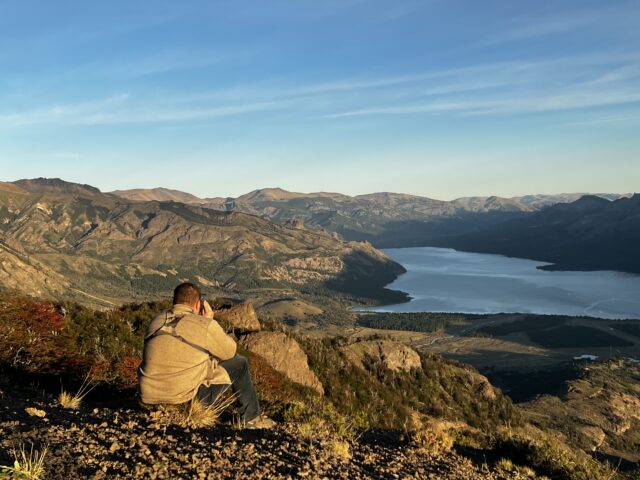
 While it might sound too good to be true, Argentina’s hunting calendar never really stops.
In a single week, one hunter can experience the red stags roaring in the Andean foothills, shoot a mixed strap of ducks and teal in the Paraná wetlands, and burn through 1,000 shells under Córdoba’s endless streams of eared doves.
The trick is simple; it just comes down to timing.
Seasons are set by provinces, species peak at different moments, and weather swings from frosty dawns to T-shirt afternoons.
| Month | Prime targets | Why it peaks |
| January – February | Dove
Evening boar |
Heat concentrates doves at the water
Lodges run siestas. |
| March – April | Red stag roar
Axis & fallow deer |
Peak “roar” for stag.
Shoulder months add antelope and deer combos. |
| May – June | Ducks
Geese Perdiz |
Southern winter fronts load the marshes.
Dogs work best in cool air. |
| July – August | Mixed-bag waterfowl
Winter dove |
Liberal duck limits in many areas.
Perdiz stays strong. |
| September – October | Spring dove
Pigeon |
Comfortable temps and steady afternoon flight lines. |
| November – December | Estate stag add-ons
Buffalo and Boar |
Fewer crowds.
Year-round big-game options if you can handle the heat. |
Waterfowl generally run from early May into August, whereas dove around Córdoba is effectively year-round with no statutory bag limit.
Red stag seasons open in March with prime rutting action mid-March to mid-April.
BIG GAME: SEASONS & PEAK WINDOWS
For many international hunters, Argentina is a hub for some of the best big-game hunting available.
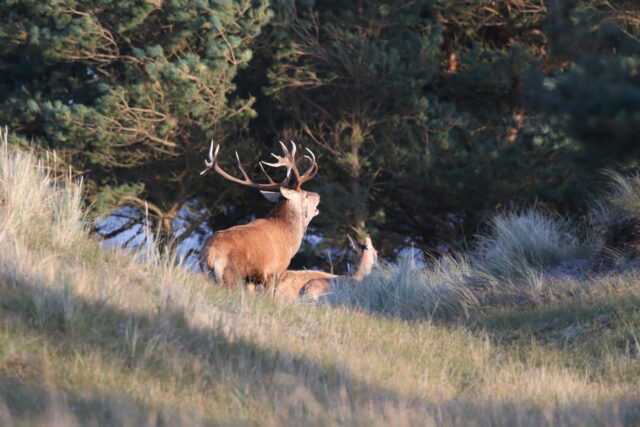 Red stag
March–July or August
Peak roar mid-March to mid-April
If you want the full soundtrack and experience of an Argentina red stag hunt, plan for the roar.
Most outfitters and regional hunters agree that the most vocal, daylight active period falls between just about mid-March through mid-April.
Depending on the province, seasons commonly open March 1 and extend through July or August (La Pampa, Neuquén, and Río Negro). Expect low brush, rolling dunes, and 120 to 220-yard shots more often than high-alpine climbs.
If you value price over theatrics, May hunts may not feature the sought-after stag roar, but you can still bring home an impressive, mature bull.
Axis and fallow deer
March–July
Axis deer overlap the red-stag window, with many La Pampa outfitters and estancias offering two-deer or stag-plus-axis combinations.
Fallow deer rut in April, with consistent opportunities from March into mid-winter depending on the province. If you’re chasing a two-rut itinerary, target late March through April so the stag roar and fallow rut both line up.
Blackbuck
Year-round
Best March–July
Blackbuck thrive in open pampas country in La Pampa and Santiago del Estero. You can hunt them all year, but cooler months improve cape color and mid-day visibility.
Many lodges price blackbuck as an add-on trophy to a deer or stag package, which pairs well with March to July hunts.
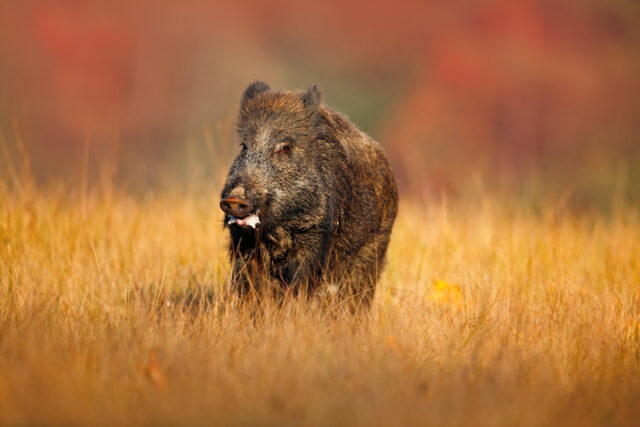 Water buffalo and wild boar
Year-round
Buffalo and boar are available twelve months a year and make for great hunt add-ons near La Pampa and northern Patagonia.
Dry fall weather in March and April improves stalking and keeps bugs down, where summer hunts are more productive if you can make sure you are in the best shape for hunting and can handle the heat and long walks.
Wingshooting: When Each Species Shines
While the red stag and other bigger species might pique a hunter’s interest when it comes to hunting internationally, they don’t call Argentina the high-volume dove hunting capital of the world for no reason.
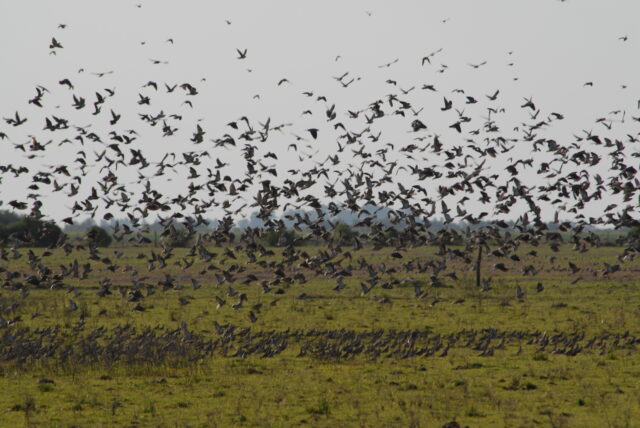 Dove
Dove
Year-round in Córdoba
Córdoba’s roosts hold tens of millions of eared doves, enough that the dove is viewed as an agricultural pest, and there’s no closed season, nor a national bag limit in the core hunting areas.
In reality, the only limiting factor when it comes to your Argentina dove hunt is how much you’re willing to shoot and spend on shells. Spring through early fall (September to April) offers increasingly steady flights and perfect temperatures, but you can always visit any month of the year and see insane volumes that very few places on earth can match.
When discussing what a day of high-volume dove shooting looks like,it is typical to fire four to six flats of ammo alone.
Lodges and long-running publications routinely describe 1,000-plus rounds per day as typical when the birds are really moving, with 1,500 being a realistic upper bound for more ambitious shooters.
Ducks and geese
Early May to early or mid-August (province dependent)
The heart of waterfowling in Argentina, and some argue South America as a whole, is the Buenos Aires, Santa Fe, Entre Ríos, and Córdoba provinces.
Openers begin in early May, and most provinces close in early to mid-August. Daily limits and species lists vary locally, but 15 to 25 ducks per day is a pretty common benchmark that outfitters set, and rosy-billed pochard, white-cheeked pintail, and various teal will likely make up most straps.
Many lodges and even some provinces require non-toxic shot for waterfowl, so confirm before you travel and plan on buying steel at the lodge if you do not want to fly with ammo.
Perdiz
May–July
Some areas into August
Perdiz is classic walk-up shooting behind pointing dogs on short grass and alfalfa. Seasons and limits are provincial, but a May 1 opening with daily limits around 8 to 12 birds per gun is a reliable rule of thumb near the main wingshooting hubs.
Many mixed-bag programs run morning ducks and afternoon perdiz once the cooler winter weather sets in.
Pigeon
Roughly April-October
Pigeons track harvest cycles for sunflowers and wheat, which makes their movements predictable.
Expect most lodges to cap daily bags, often at 100 to 200 birds, even where provincial limits allow more. This is a hunting conservation effort to protect local fields and keep the shooting consistent.
Pigeon days pair very well with dove or perdiz and are most comfortable on overcast, cooler afternoons.
WHAT’S THE BEST TIME FOR A “CAST & BLAST”?
One type of hunt, other than the red stag and high-volume dove, that has made Argentina famous is mixing the well-known big game or wingshooting in Argentina with a fishing excursion.
This is referred to as a Cast and Blast.
Now, a large majority of Argentina’s cast and blast programs are built around Golden Dorado fishing paired with wingshooting, so the best window is when both species overlap in peak.
From October through April, the Paraná River and its tributaries are host to active Dorado, while dove, ducks, and perdiz are strong in numbers at nearby fields. Outfitters in Entre Ríos, Santa Fe, and Córdoba use this stretch to alternate mornings in dove blinds with afternoons on the water, or to schedule full hunting and fishing days back to back.
Within that season, the period that tends to deliver the heaviest Dorado action is mid-summer months (December through February), while dove remain a year-round constant.
Early spring and late fall can tend to be more bird-heavy, but still allow anglers a few productive hours on the river. For the traveling sportsmen, this October through April block is the most efficient time to plan a cast and blast itinerary, with lodges tailoring the daily mix of hunts and fishing to match conditions.
REGIONAL HOTSPOTS AND HOT TO TARGET THEM
Just as the United States has hotspots for different species of animals all across the country, Argentina also has what hunters might consider “hot spots”.
Córdoba (central)
Rightfully known as the world’s dove capital, this region offers year-round shooting and short transfers from the city of Córdoba to roosts and feeding fields. Many lodges operate within an hour of the airport and operate private leases on multiple different roosts, which allows them to keep drives short and pressure rotated.
La Pampa (central-west)
This region is better known for its free-range red stag, blackbuck, and boar on its open, brushy estancias. This is likely the easiest place to combine deer or stag with wingshooting without giant travel days in between.
Santa Fe and Entre Ríos (east-central)
The Paraná River and its rice and corn country are duck magnets from May through July. You are more than likely to see rosy-bills, pintails, and teal in the straps, with the option to add dorado fishing between hunts at some lodges.
Neuquén and Río Negro (northern Patagonia)
Rugged valleys and cool nights produce heavy-antlered red deer and crisp autumn conditions. Expect chilly mornings and quick warm-ups through March and April.
WHAT TO EXPECT FOR THE WEATHER?
Most hunting in Argentina takes place between roughly 33° S and 41° S, which means real seasons.
In Córdoba, February averages around the low 80s °F with warm nights, so breathable shirts, a brimmed hat, and hydration salts are must-haves for those sought-after summer dove hunts.
In Neuquén, March averages about 68 °F with cool mornings, the kind of swing that rewards a merino base layer and a packable vest. Waterfowl months are winter in the Southern Hemisphere, so just come prepared for cold boat rides and relatively damp blinds.
LICENSES, FIREARMS, AND PAPERWORK
While it might seem to be a small piece of the larger puzzle that is planning a hunting trip to Argentina, making sure you have your paperwork and licensing for your travel and firearms is extremely important.
Provincial licenses
Each province issues its own temporary hunting license. Outfitters typically handle the process for their hunters once they have the passport details and the species they intend to hunt.
Just be sure to confirm exact fees with your lodge, since costs and payment methods change with local regulations.
BRINGING A FIREARM
Tourists who enter with guns must complete ANMaC’s temporary authorization form in triplicate and present it on arrival and departure. The authorization is valid up to 90 days, and, at publication, the fee posted by ANMaC is ARS 20,000 per firearm.
Several Argentine consulates recommend applying for a temporary import permit before travel, and many lodges can arrange rental guns if you prefer to avoid the paperwork.
Ammunition and shot types
Policies on non-toxic shot for waterfowl have tightened in recent years.
Many provinces and outfitters now require steel or other non-toxic shot for ducks and geese, and most outfitters will sell appropriate cartridges at their lodge. Just make sure to always reconfirm with your outfitter before packing.
PRACTICAL TIMING TIPS
From a more general perspective, aim for mid-March to mid-April if the stag roar is your headline species and you want the full, vocal show.
If you are price-sensitive, maybe looking for a discounted hunt, May often offers some great, mature bulls, but without the peak-rut rates that can drive up the bill, and you can still take a crack at early waterfowl.
If volume shooting is the point, September through April in Córdoba gives you forgiving weather and relentless dove traffic, with the understanding that true year-round is no exaggeration there.
Lastly, for mixed-bag waterfowl and upland, June and July are the sweet spot.
FAQ’s
When exactly is duck season?
Expect early May openers, with most provinces closing in early to mid-August. Ask your outfitter for the local decree that applies to your specific marsh.
How many shells should I plan for high-volume dove?
On a full day in Córdoba, it is common to fire 1,000 rounds or more when flights are steady. Strong days can push toward 1,500. Lodges keep pallet loads of 12 and 20 gauge and will restock you in the blind.
Is there really no dove limit?
Yes, in the core Córdoba areas. Doves are treated as an agricultural pest, and there is no national bag limit posted for the high-volume lodges there. Your real limit is stamina and shell budget.
What about pigeons and perdiz?
Pigeon seasons and limits vary by area. Many lodges impose a 100 to 200 bird cap, even where provinces allow more. Perdiz typically runs from May through July, with daily limits of around 8 to 12.
saadventuresafaris.
Carlos Torriglia
[email protected]