



 Few pursuits stir the hunter’s spirit like chasing Rocky Mountain elk. Their bugles echoing through alpine valleys in September, the sight of a massive herd threading through timber, or the challenge of stalking a wary bull across rugged terrain—elk hunting is as much about understanding behavior as it is about stamina and skill.
Success doesn’t come easy. Elk are among the most wary, adaptable, and challenging big-game animals in North America. To consistently find them, hunters must not only endure the mountains but also learn the rhythms, instincts, and social dynamics that shape elk behavior.
In this article, we’ll break down the key behaviors of Rocky Mountain elk and explore how hunters can use this knowledge to improve their chances in the field.
The Social Life of Elk
Elk are highly social animals, moving through the landscape in groups that vary in size and structure depending on the season.
- Cows and Calves: Most of the year, cow elk form herds with their calves. Safety in numbers helps protect the young from predators like wolves, bears, and mountain lions.
- Bachelor Groups: Outside the rut, bulls often band together in bachelor groups. These groups tend to be smaller and more reclusive.
- Harems During the Rut: Come fall, dominant bulls gather harems of cows and spend tremendous energy defending them. Herd dynamics during this period are intense, with constant posturing, bugling, and occasional fights.
Hunters who understand these dynamics know that a lonely bugle in summer probably signals a bachelor bull, while a chorus of calls in September usually means a herd is nearby.
Seasonal Behavior Shifts
Like white-tailed deer, elk behavior changes dramatically through the seasons, but the mountainous environments they inhabit add another layer of complexity.
Summer: High Country Living
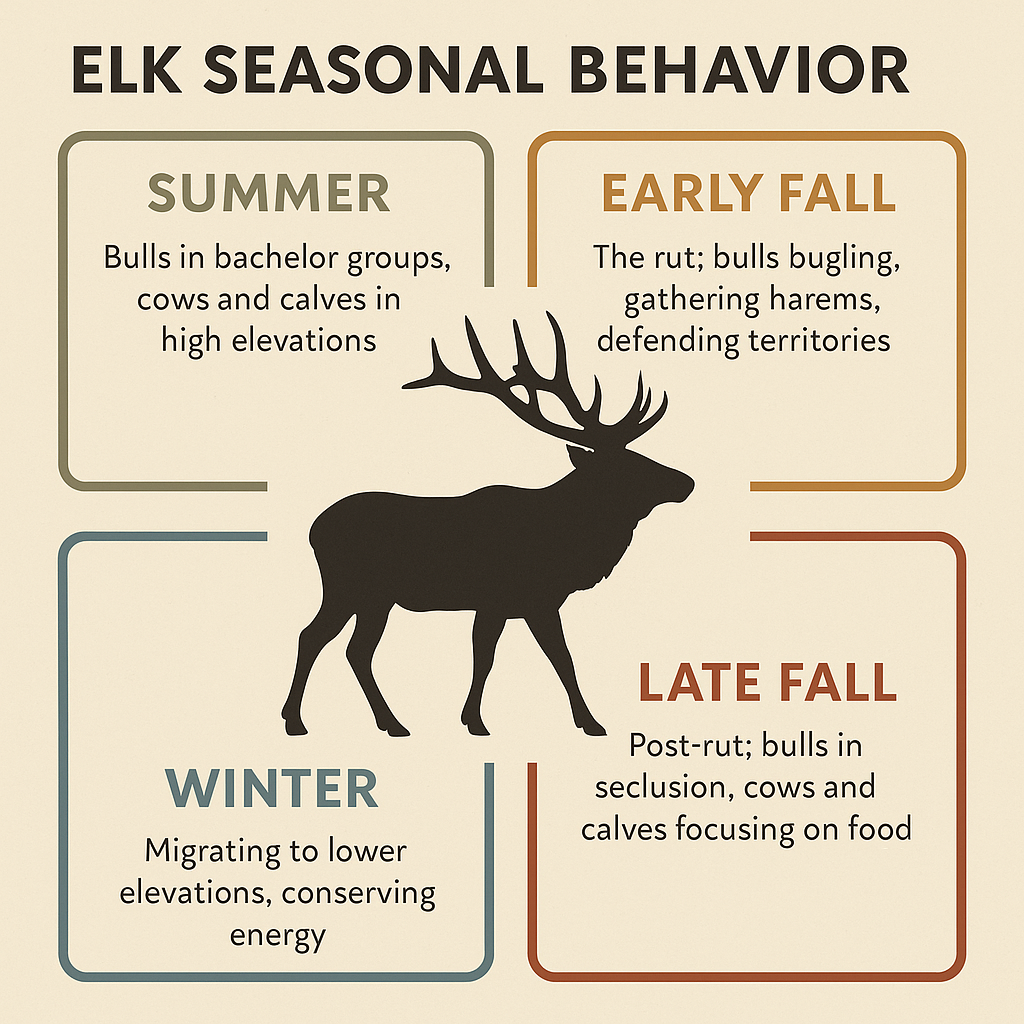
In the warmer months, elk head to higher elevations where lush alpine meadows provide rich forage. Cows with calves seek areas with abundant food and cover, while bulls use the summer to regain body weight and grow antlers. For hunters, glassing these high-country feeding areas in early morning and late evening often reveals bachelor groups.
Early Fall: The Rut
The elk rut—usually from early September to mid-October—is the heart of the hunting season. Bulls become highly vocal, bugling to advertise dominance and attract cows. They wallow in mud to coat themselves with scent, thrash trees to show strength, and challenge rivals.
This period provides the best calling opportunities. Hunters who can read bull responses and imitate cow calls or bugles effectively stand a strong chance of drawing bulls into range. But with bulls focused on their harems, patience and timing are essential.
Late Fall: Post-Rut Transition
After the rut, bulls are exhausted and in need of recovery. They often retreat to secluded, rugged areas to feed and rest. Cows and calves regroup and focus on food sources to build reserves for winter. Hunters during late season must be prepared to cover ground and glass remote areas, as elk become more wary and less vocal.
Winter: Survival Mode
In winter, elk migrate to lower elevations, seeking areas with less snow and more accessible forage. They conserve energy by minimizing movement. Hunting is more difficult due to reduced activity and increased sensitivity to pressure, but knowledge of winter ranges can still yield opportunities.
Daily Patterns and Movement
Elk are crepuscular, most active during dawn and dusk, with midday movement depending on pressure, weather, and the rut. Unlike deer, elk often cover significant distances daily, moving between feeding and bedding areas.
- Morning: Elk typically feed heavily at night and into the early morning before retreating to bedding areas.
- Midday: Unless it’s the rut, elk usually bed down in thick timber, on shaded slopes, or in areas with good wind advantage.
- Evening: Elk emerge again to feed, often returning to the same meadows or feeding grounds night after night—unless disturbed.
Hunters who position themselves between bedding and feeding areas, especially along travel corridors, often encounter elk moving predictably at first and last light.
The Language of Elk
Communication plays a huge role in elk behavior, especially during the rut. Learning to interpret and mimic elk vocalizations can be one of the most powerful tools in a hunter’s arsenal.
- Bugles: Bulls bugle to assert dominance, locate cows, and challenge rivals. The tone, length, and aggression in a bugle can reveal the bull’s mood and maturity.
- Cow Calls: Soft mews and chirps are social calls that maintain contact within the herd. Hunters often use cow calls to calm wary elk or draw bulls closer.
- Glunks and Chuckles: Deep, rhythmic sounds made by bulls when close to cows, often signaling presence and dominance.
- Bark: A sharp alarm call. If you hear it, the elk are likely aware of you.
Successful calling means more than making sounds—it requires reading the situation. Overcalling or using the wrong tone can educate elk and push them out of the area.
Pressure and Adaptability
Elk learn quickly and adjust to hunting pressure. In heavily hunted areas, they move earlier or later in the day, avoid open meadows during shooting hours, or relocate to steeper, thicker cover. Mature bulls, especially, are adept at avoiding humans.
To counter this:
- Hunt Away from Roads and Trails: Many elk head deeper into the backcountry once pressure increases.
- Use the Wind Religiously: Elk trust their noses more than their eyes. Always hunt with wind in your favor.
- Adapt Mid-Hunt: If calling isn’t working, consider spot-and-stalk or still-hunting through known bedding areas.
- Be Patient: Elk often return to pressured areas after a few days if left undisturbed.
Terrain and Habitat Preferences
Rocky Mountain elk prefer varied terrain, using ridges, benches, and drainages to their advantage. Bedding sites are often chosen for wind advantage and visibility, while feeding areas are usually meadows, clearcuts, or burns rich in grasses and forbs.
Hunters should study topo maps and satellite imagery before the season, looking for:
- North-Facing Slopes: Cooler, shadier bedding areas.
- Meadow-Timber Edges: Prime feeding-to-bedding transition zones.
- Travel Corridors: Saddles, ridgelines, and creek bottoms often serve as natural routes.
Final Thoughts
Rocky Mountain elk are among the most thrilling—and challenging—animals to hunt. Their behavior is shaped by survival instincts, social dynamics, and the unforgiving landscapes they call home. To consistently find success, hunters must move beyond chance encounters and become students of elk behavior.
By understanding seasonal shifts, daily patterns, vocal communication, and their response to pressure, you’ll not only improve your odds of a filled tag but also deepen your respect for one of North America’s most iconic big game animals.
At the end of the day, elk hunting is not just about the harvest—it’s about immersing yourself in wild places, listening to the music of bugles on crisp mountain mornings, and learning to walk in step with one of nature’s most magnificent creatures.
Be a part of the HSCF Community!
Joining HSCF means becoming part of a passionate, global community dedicated to wildlife conservation and sustainable hunting. Members support critical conservation efforts and gain access to exclusive events, educational resources, and networking opportunities. United by a love for nature and responsible outdoor practices, HSCF members play a vital role in preserving wildlife and habitats for future generations.